
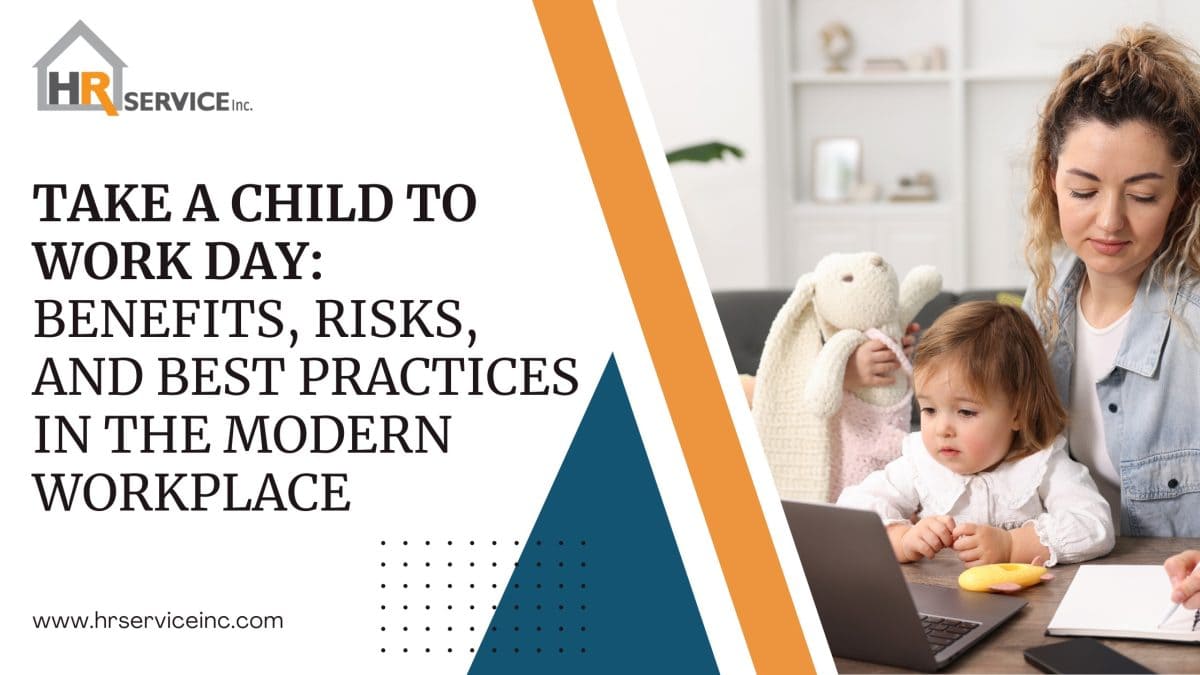
Take a Child to Work Day: Benefits, Risks, and Best Practices in the Modern Workplace
Introduction
Known officially as “Take Our Daughters and Sons to Work Day,” this nationally recognized observance encourages employers to invite children into the workplace for a firsthand look at professional environments. Held each year near the end of April, the day gives children the opportunity to observe meetings, explore office settings, and participate in age-appropriate activities that introduce them to different industries.
For employers, this is more than a one-day event; it’s an opportunity to create a meaningful employee experience while showcasing workplace culture. However, participation requires thoughtful planning. Organizations must balance the benefits with considerations around
safety, productivity, and inclusion, while also determining how (or whether) to incorporate remote employees.
Historically Significant Origins
Take Our Daughters to Work Day was created in 1992 to address gender inequality in the workplace. The first official event was held in 1993 and aimed to expose young girls to professional environments and career possibilities that were often perceived as male-dominated. The program quickly grew in popularity across the United States, with millions of students visiting workplaces ranging from corporate offices to government agencies.
By 2003, the initiative expanded to include boys, becoming Take Our Daughters and Sons to Work Day, reflecting a broader goal of encouraging all children to explore career opportunities without gender limitations.
Recently, forward-thinking organizations have encouraged evolving the title to “Take a Child to Work Day and Beyond” to include both children who may not have access to a parent’s workplace and adults who can share their workplace with a child for whom they are not the primary caregiver but still have a close connection. This evolution highlights the growing emphasis on inclusivity and thoughtful planning.
Benefits of Take a Child to Work Day
One of the biggest advantages of Take a Child to Work Day is the opportunity for early career exposure and workforce awareness. Through firsthand observation, children gain insight into professional environments, workplace collaboration, and how problem-solving and communication take place in real time. This type of exposure helps bridge the gap between education and real-world careers, supporting long-term career readiness and workforce development.
Exposure to role models and workplace representation also plays a meaningful role. Seeing professionals in different roles and industries can shape future career interests, promote an understanding of diversity and inclusion, and inspire long-term professional goals.
In addition, observing a parent or guardian at work helps children better understand the value of hard work, professional expectations, and the responsibilities associated with supporting a household. These experiences contribute to building respect, discipline, and awareness of workplace dynamics.
Interactive elements such as job shadowing, workplace workshops, and team interactions further support confidence building, communication skills, and curiosity about different industries.
Benefits for Employers and Organizations
From an organizational perspective, Take a Child to Work Day can significantly enhance employee engagement. Family-friendly initiatives often contribute to improved morale, stronger workplace satisfaction, and a more connected company culture. Employees tend to feel more valued when their personal lives are acknowledged and supported.
The presence of children in the workplace can also help humanize the work environment. It encourages stronger team connections, fosters a more positive atmosphere, and serves as a reminder of purpose beyond daily tasks.
Additionally, the day provides an opportunity for organizations to showcase their company culture, career opportunities, and community involvement. This not only supports employer branding but also introduces younger generations to potential career paths, contributing to long-term talent pipeline development.
Risks and Challenges of Take a Child to Work Day
While the benefits are clear, employers must also consider potential risks and challenges. Workplace safety remains a top priority, particularly in environments such as construction sites, healthcare facilities, or industrial settings. Ensuring safe access areas, proper supervision, and compliance with OSHA and safety regulations is essential.
There is also the potential for productivity disruptions. Without proper planning, meetings may be interrupted and workflows may slow down. Incorporating structured activities and clear schedules can help minimize these disruptions while maintaining productivity.
Confidentiality and compliance risks must also be addressed, especially in industries that handle sensitive information such as HR, legal, healthcare, or finance. Employers should establish clear policies around data privacy, protect confidential documents, and ensure secure systems remain inaccessible to visitors.
Equity and inclusion considerations are equally important. Not all employees may have children or access to participate, so offering extended family participation, inclusive alternatives, or virtual options can help ensure a more equitable experience.
Take a Child to Work Day in a Remote and Hybrid Workplace
As workplaces continue to evolve, organizations must adapt participation for remote and hybrid environments. Virtual options such as online career presentations, virtual office tours, “Ask Me About My Job” sessions, and interactive workshops for children can create engaging and inclusive experiences.
For organizations looking to strengthen their approach to flexible work environments, you can explore our hybrid and remote work best practices and participation strategies to support more inclusive and engaging experiences.
Best Practices for a Successful Take a Child to Work Day
To create a meaningful and well-managed experience, employers should focus on thoughtful planning and clear communication. Establishing age guidelines, typically between 8–17 years old, helps ensure activities are appropriate and engaging.
Providing structured activities such as workshops, office tours, and group sessions allows children to participate in a way that is both educational and manageable for the organization.
Clear communication of expectations is also critical. Employees should understand their supervision responsibilities and workplace rules in advance. At the same time, organizations should define restricted areas, equipment limitations, and safety protocols to prioritize workplace safety.
Using consent forms or visitor waivers can help manage liability and compliance, while offering inclusive options such as virtual participation or flexible attendance ensures broader accessibility.
The Future of Take a Child to Work Day
As workplaces continue to evolve, Take a Child to Work Day remains a valuable initiative that connects education and career paths, families and workplaces, and future generations with professional opportunities. Whether in-person or virtual, the event supports career development, employee engagement, and workplace culture initiatives.
Final Thoughts
When thoughtfully planned, Take a Child to Work Day is more than just a workplace event; it is a strategic HR and employee engagement opportunity. It allows organizations to inspire future professionals, strengthen employee relationships, and showcase organizational values.
By balancing benefits, risks, HR compliance, and workplace safety, employers can create a meaningful and impactful experience for both children and employees.
How HR Service Inc. Can Help
HR Service Inc. helps employers balance employee engagement, compliance, and workplace safety to create structured, meaningful workplace experiences. Whether you’re planning initiatives like Take a Child to Work Day or looking to strengthen your overall HR strategy, our team is here to help. To learn more or get started, contact us at solutions@hrserviceinc.com.